Mettre en évidence:
acridine ester
, luminescent reagents
, Chemiluminescence reagent
Acrylamide ester luminescence detection: efficient acquisition scheme and complete analysis
As a key marker in chemiluminescence immunoassay, the luminescence mechanism of acridine ester has significant characteristics: in alkaline hydrogen peroxide solution, acridine ester molecules rapidly undergo covalent bond cleavage, electron transition, and photon release processes after being triggered. This series of reactions is extremely rapid, usually completed within seconds from start to finish, and the effective light window is particularly short. This feature not only brings the advantage of high signal-to-noise ratio, but also places high demands on the synchronization and accuracy of signal acquisition technology. Traditional intermittent or manual detection methods often suffer from time lag, making it difficult to fully capture the luminescence signal, resulting in insufficient data integrity and affecting the accuracy of experimental results.
|
Product Name
|
Acridine ester NSP-DMAE-NHS
|
CAS Number
|
194357-64-7
|
|
Molecular Weight
|
590.60
|
MolecularFormula
|
C30H26N2O9S
|
|
Product Appearance
|
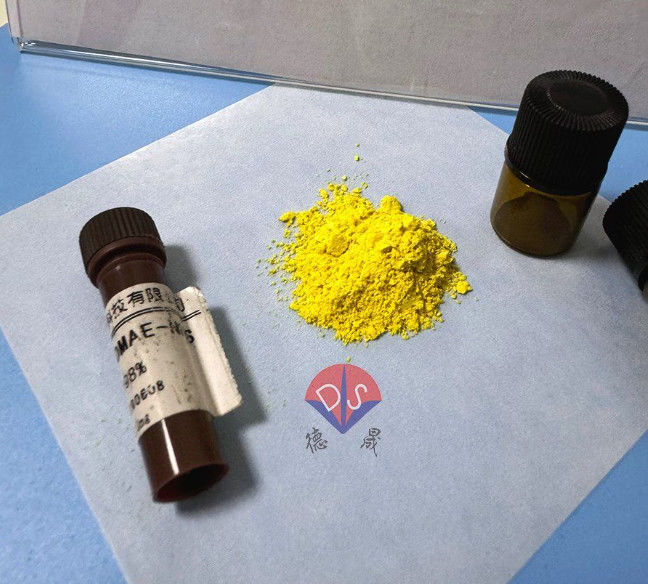
Yellow solid/powder
|
Product Purity
|
≥98%(HPLC)
|
|
Product Advantages
|
Good water solubility, stable process, and small inter batch differences
|
Storage Conditions
|
Avoid light and moisture
|
|
Product Usage
|
Research on Immunoassay, Nucleic Acid and Peptide Detection, etc
|
Manufacturer
|
Hubei Xindesheng
|
Core challenge: The bottleneck of transient light emission collection
The luminescence kinetics of acridine esters exhibit a typical trend of rapid rise and decay, with effective signals concentrated in a very short period of time. If conventional photometric detection equipment is used, there is often a time interval between triggering and measurement, which can easily miss the peak signal period and only collect residual signals in the attenuation stage, directly reducing the sensitivity and dynamic range of detection. In addition, manual sampling operations inevitably introduce time errors, resulting in inconsistent triggering times between different samples and a decrease in data comparability. Therefore, how to achieve millisecond level synchronization between light emission triggering and signal acquisition, and minimize the time deviation caused by manual operation, has become the key to improving detection efficiency.

acridine ester powder
Technical solution: Integrated synchronous detection system
The current effective solution to the above challenges is to adopt highly integrated optical detection systems. The system usually has a built-in high-sensitivity photon detector and a fast response photometer, which can trigger light emission while initiating signal capture, achieving near real-time photon collection. The photon detector is responsible for capturing weak luminescent events, while the internal photometer quantifies the light intensity in real-time, and the two work together to ensure the complete acquisition of transient signals. In addition, to minimize the time difference between sample addition and detection, it is recommended to use a multifunctional enzyme-linked immunosorbent assay (ELISA) reader equipped with an automatic sampler. This device can achieve automatic transfer of samples and injection of reagents, with triggering actions precisely controlled by the program, thereby reducing human operation delays to a lower level and ensuring that all samples are measured under consistent time conditions.
System advantage: Improve the accuracy and throughput of detection
The system that integrates automatic sampling and synchronous detection functions has brought multiple improvements to the acridine ester luminescence experiment. Firstly, in terms of precision, the system effectively avoids signal omission through hardware synchronization and automatic control, and can stably capture the peak and shape of the luminescence curve, providing a reliable data foundation for quantitative analysis. Secondly, in terms of repeatability, automated processes eliminate the random errors caused by manual sample addition, reducing the intra - and inter batch coefficients of variation. Furthermore, in terms of experimental efficiency, the automatic sampler supports continuous sample processing and, combined with fast signal acquisition, significantly improves detection throughput, meeting the needs of high-throughput screening. Overall, this solution transforms the challenge of transient luminescence into a highly sensitive and reproducible detection advantage through technological integration.
Conclusion
In summary, facing the technical challenges of the transient characteristics of acridine ester luminescence signals, a detection system that integrates an internal photometer, photon detector, and automatic sampling function can achieve signal synchronization, precise capture, and effective control of operation time deviation. This solution not only overcomes the collection difficulties caused by brief luminescence, but also improves the overall performance of detection, laying a solid technical foundation for related research and applications.
Product packaging
Hubei Xindesheng Material Technology Co., Ltd., as an advantageous manufacturer of luminescent reagents, has a history of nearly 20 years since its establishment in 2005. With rich research and development experience, it currently sells luminescent reagents with different functional groups such as acridine ester NSP-DMAE-NHS, acridine ester NSP-SA, and acridine ester NSP-SA-NHS. Desheng has professional laboratories and technicians who can provide customized services according to customer requirements. It is your trusted supplier of chemiluminescence reagents. If you have any related procurement needs in the near future, please feel free to contact me!


 Votre message doit contenir entre 20 et 3 000 caractères!